Overview
Porcelain veneer are thin, custom-made ceramic shells bonded to the front of selected teeth to improve their colour, shape, size, or alignment. They’re a versatile cosmetic option for chipped, worn, uneven, gappy, or stubbornly discoloured teeth that don’t respond to whitening — and because porcelain reflects light like natural enamel, a well-planned veneer blends in rather than standing out.
Veneer usually involve removing a small amount of enamel so the shell sits flush and natural, which means they’re a considered, largely irreversible step rather than a quick fix. We take time to review your smile, bite, gum health, and goals first, and we’ll show you a preview — a digital mock-up or wax-up — so you can see the proposed result before any preparation begins.
Not everyone needs a full set. Sometimes one or two veneer, or a combination of whitening and bonding, gives a more natural and cost-effective result. We’ll tell you honestly what will make the biggest difference for your smile.
Who is it for?
- Veneer suit patients bothered by the colour, shape, size, or minor positioning of their front teeth — including discolouration that won’t respond to whitening, small chips, worn edges, or gaps.
- They work best when the underlying teeth and gums are healthy and there’s enough enamel to bond to.
- They may not be the best fit where there is active decay or gum disease (we treat these first); where teeth are heavily broken down, in which case a crown may be more appropriate; or where you clench or grind heavily, which can chip porcelain — we’ll discuss a nightguard or an alternative.
- For alignment issues beyond the mild range, orthodontics (braces or aligners) often gives a healthier, more conservative result than masking the position with veneer.
- This isn’t a self-diagnosis checklist — we assess your teeth, gums, and bite in person and explain what result is realistic before recommending veneer.
What to expect
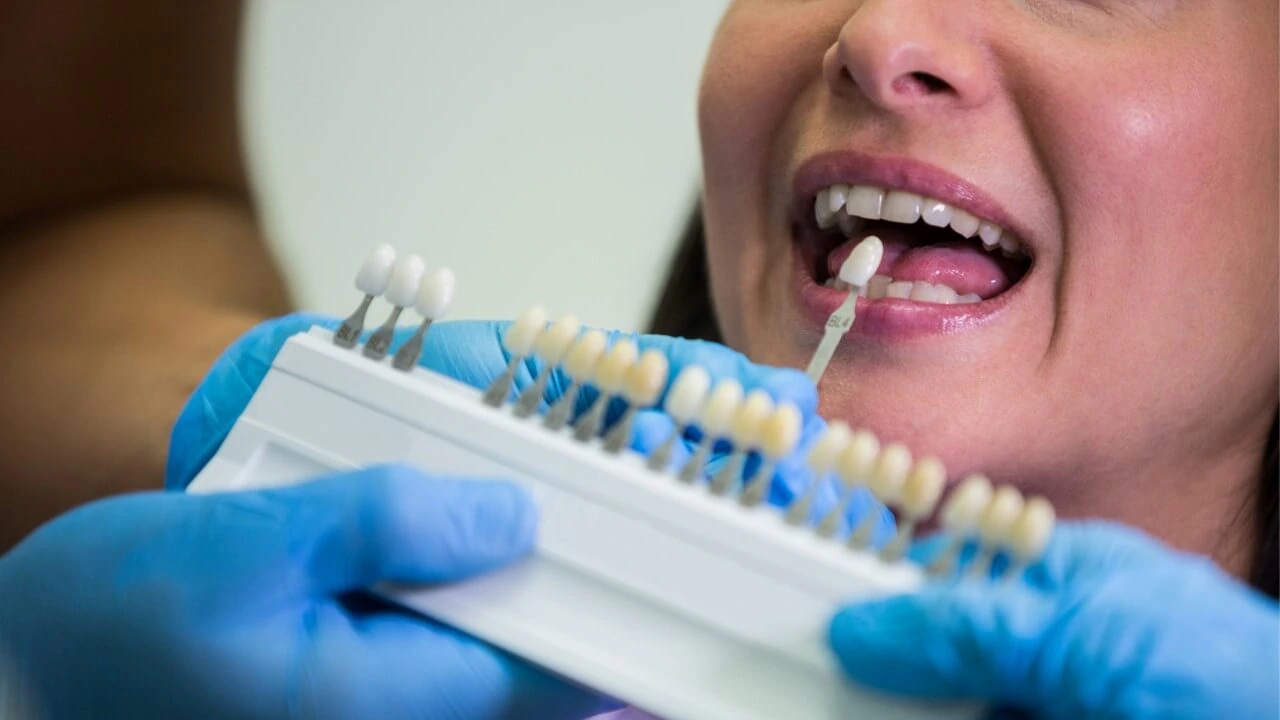
- 01Consultation & design — we discuss your goals, assess your teeth, gums, and bite, and record shade and photos. We plan the look with a digital mock-up or wax-up so you can preview the result.
- 02Preparation — a small amount of enamel is usually removed so the veneer sit naturally. We take precise impressions or a digital scan, and may fit temporaries while your veneer are made.
- 03Fabrication — your veneer are custom-made in the shade and shape agreed, so they match your face and neighbouring teeth.
- 04Bonding & bite check — the veneer are trial-fitted, then bonded in place. We refine the bite and polish the edges so everything feels comfortable and looks seamless.
- 05Review & care — we check the veneer settle well and go through how to look after them so they last.
Benefits
- Natural appearance — porcelain reflects light like real enamel and resists staining better than natural teeth or bonding.
- Addresses several concerns at once — colour, shape, chips, and minor gaps can be improved in the same treatment.
- Conservative compared with crowns — veneer keep more of your natural tooth than a full crown for suitable cases.
- Custom-designed — planned around your face, smile line, and bite, with a preview before anything is prepared.
Are porcelain veneer safe, and will they damage my teeth?
Veneer are a safe, well-established cosmetic treatment when they’re planned carefully and your teeth and gums are healthy to begin with. The main thing to understand is that preparing a tooth for a veneer usually removes a small amount of enamel, and enamel doesn’t grow back — so a tooth with veneer will generally always need a veneer or similar restoration afterwards.
That’s exactly why we don’t rush the decision. We check that veneer are the right tool for your goals (versus whitening, bonding, or orthodontics), preview the design before preparing anything, and keep the preparation as conservative as the case allows. If you grind your teeth, we’ll plan protection so the porcelain lasts.
Aftercare & making your veneer last
- Brush and floss as normal — veneer still need good daily hygiene, and healthy gums keep the margins looking clean.
- Avoid biting hard objects (ice, pens, fingernails) or using your teeth as tools, which can chip porcelain.
- If you clench or grind, wear the nightguard we recommend to protect the veneer while you sleep.
- Keep your regular checkups and cleanings so we can polish the veneer and check the bite and margins over time.
Veneer vs. teeth whitening vs. smile makeover
Veneer are one of several ways to improve how your smile looks. Here’s how they compare with our other cosmetic options.
| Service | Addresses | Invasiveness |
|---|---|---|
| Veneer | Discolouration that won’t whiten, chips, minor gaps, shape | Minimal enamel reshaping; largely irreversible |
| Teeth Whitening | Surface stains, yellowing, mild discolouration | Non-invasive |
| Smile Makeover | Combined concerns — colour, shape, alignment | Varies by combined treatments |
Frequently asked questions
How long do porcelain veneer last?
With good care, porcelain veneer typically last around 10 to 15 years, and often longer. How long they last depends on your bite, oral hygiene, and habits such as grinding or biting hard objects. We’ll show you how to protect them so they last as long as possible.
Do veneer ruin or damage your natural teeth?
Veneer don’t damage healthy teeth, but preparing a tooth usually involves removing a small amount of enamel, which doesn’t grow back. That makes veneer a largely irreversible step — the tooth will generally need a veneer or similar restoration afterwards. We keep preparation conservative and make sure veneer are the right choice before starting.
What’s the difference between veneer and crowns?
A veneer covers only the front surface of a tooth and is mainly cosmetic, keeping most of the natural tooth. A crown covers the whole tooth and is used when a tooth is heavily damaged or weakened. We recommend a veneer for cosmetic cases with healthy teeth, and a crown when the tooth needs full protection.
Can I get just one veneer, or do I need a full set?
You can have a single veneer if only one tooth needs improving — for example a chipped or discoloured front tooth. We match it to your surrounding teeth. Many patients only need one or a few veneer rather than a full set, and we’ll advise what gives the most natural result.
Do veneer stain like natural teeth?
Porcelain resists staining better than natural enamel or composite bonding, so veneer hold their colour well. Your natural teeth around them can still stain, though, so good hygiene and occasional professional cleaning keep your whole smile looking even.
Should I whiten my teeth before getting veneer?
Often yes. Because veneer are made to a fixed shade and don’t whiten later, we usually whiten your natural teeth first (if you want them brighter) so the veneer can be matched to your preferred final colour. We’ll plan the sequence during your consultation.
Will veneer look fake or too white?
Not when they’re properly planned. We choose a shade and shape suited to your face and existing teeth, and preview the design with a mock-up before preparing anything, so the result looks natural rather than obviously artificial.
How much do porcelain veneer cost in Malaysia?
Cost depends on how many veneer you need and the material and lab used. We give you a clear, itemised quote after your consultation and mock-up — contact your nearest Tooth Buddy clinic for current pricing.