
What are Clear Aligners?
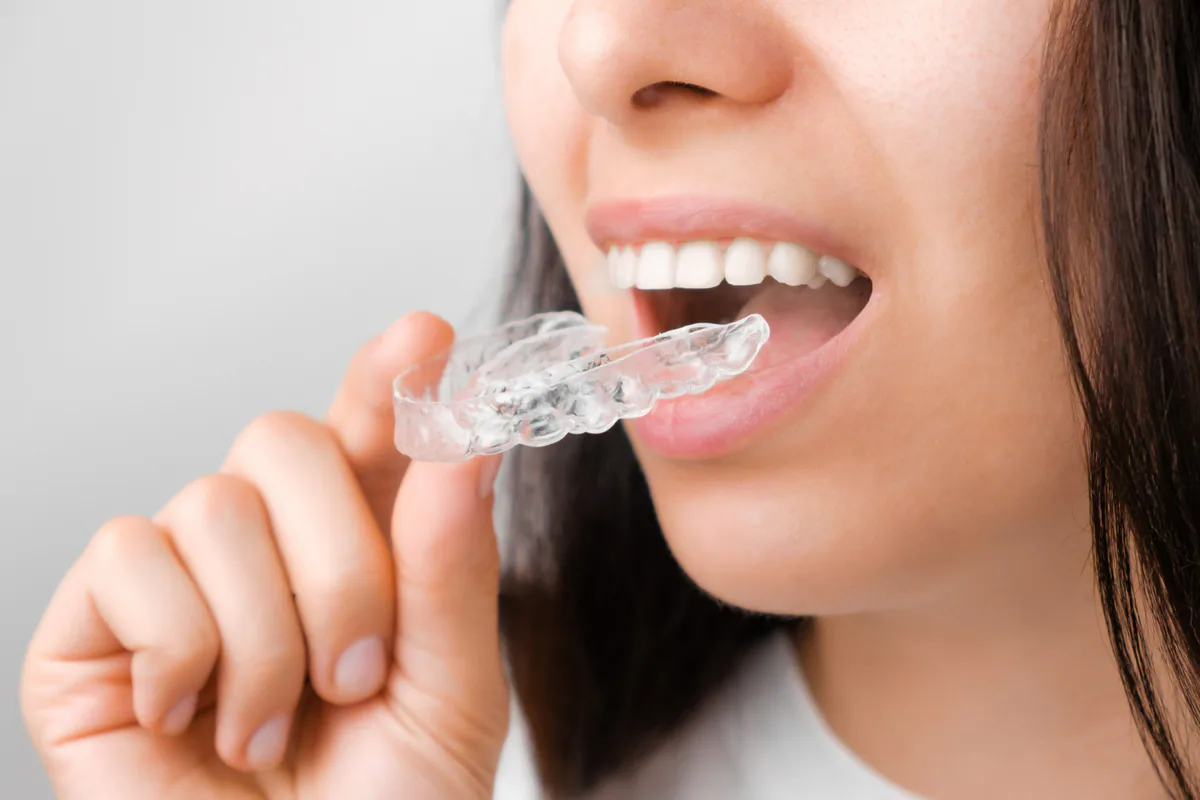
Clear aligners are custom-made, transparent trays worn over your teeth to gradually move them into better positions. You wear each set for around one to two weeks before switching to the next in the series, with each tray making a precise, planned adjustment.
Their near-invisible design makes clear aligners a popular choice for adults and teenagers who want to straighten their teeth discreetly.
Unlike braces, aligners are removable. You take them out to eat, brush and floss, making daily oral hygiene easier and allowing you to enjoy your usual foods. However, treatment depends on wearing them consistently, usually for 20–22 hours a day.
Clear aligners can treat many types of crowding, spacing and bite concerns, although suitability depends on your individual case and the tooth movements required.
Treatment is planned digitally, allowing you to see a simulation of the planned tooth movements before you begin. Regular review appointments are still important, and retainers are needed afterwards to help keep your teeth in their new positions.
Get in Touch TodayWho Is Clear Aligner Treatment Suitable For?

Clear aligners may be suitable for teenagers and adults who want a discreet, removable way to straighten their teeth.
- Crowded or overlapping teeth
- Gaps between teeth
- Crooked or misaligned teeth
- Selected overbite, underbite, crossbite and open bite cases
Suitability depends on your bite, tooth position, gum health and the type of tooth movement required. An in-person dental assessment is needed to determine whether clear aligners or another orthodontic option is more appropriate.
Book An AppointmentHow Does Clear Aligner Treatment Work?
- 01
Consultation, 3D Scan and Dental Assessment
Our dentist will discuss your concerns and treatment goals, then examine your teeth, gums and bite to determine if clear aligners are suitable for you. A 3D scan will create a detailed digital model of your teeth and gums, which is used to plan tooth movements and custom-make your clear aligners. X-rays, photographs or other dental records may also be taken where needed.
- 02
Custom Aligner Plan
If clear aligner treatment is suitable for you, a personalised series of aligners will be planned to move your teeth step by step towards the desired position, with the estimated treatment duration and expected outcome outlined before treatment begins.
- 03
Aligner Fitting
Once your aligners are ready, your dentist will check their fit and provide instructions on how to wear and care for them. We will advise you to wear them most of the time, removing them only for eating, drinking, brushing and flossing to help keep your treatment on track.
- 04
Progress Reviews
Regular dental reviews are needed to check that your teeth are moving as planned. If necessary, adjustments or additional refinement aligners may be recommended.
- 05
Retainers After Treatment
Once treatment is completed, a retainer is used to help keep your teeth in their new positions.
Why Choose Clear Aligner Treatment?
Here are some reasons why clear aligners may be a suitable choice for your orthodontic treatment.
Discreet appearance
Clear aligners are nearly invisible, making them less noticeable than traditional metal braces.
Removable when eating and cleaning
You can remove your aligners for eating, brushing and flossing, making it easier to maintain your usual diet and oral hygiene routine.
Custom-fitted
Each aligner is made to fit your teeth closely for a more comfortable fit, while helping it stay securely in place and apply controlled pressure to guide tooth movement.
Less irritation than metal braces
Clear aligners do not use metal brackets or wires, so they may cause less irritation to your cheeks and lips than traditional metal braces.
Clear Aligners vs Metal Braces vs Self-Ligating Braces
Each orthodontic option works differently. The right choice depends on your teeth, bite, treatment needs and lifestyle.
| Treatment | Suitable For | Type | Key Consideration |
|---|---|---|---|
| Clear Aligners | Many crowding, spacing and selected bite concerns | Removable | Nearly invisible and removable for eating and cleaning, but requires consistent wear |
| Metal Braces | A wide range of orthodontic concerns, including complex tooth movements and bite problems | Fixed | Reliable for comprehensive tooth movement, but more visible and requires extra care when eating and cleaning |
| Self-Ligating Braces | A wide range of orthodontic concerns, similar to conventional fixed braces | Fixed | Uses built in clips to hold the orthodontic wire instead of elastic ties |
The most suitable treatment can only be determined after assessing your teeth, gums and bite.
Clear Aligner Before & After Results
Explore how clear aligner treatment can improve tooth alignment and help you smile with greater confidence.
What Our Patients Say
Hear what our patients say about their experience at Tooth Buddy Dental Clinic.
Frequently asked questions
What is a clear aligner?
A clear aligner is a custom-fitted, transparent tray designed to gradually move your teeth into their planned positions. A series of aligners is worn in sequence throughout treatment.
What is clear aligner treatment suitable for?
Clear aligner treatment may be suitable for teenagers and adults with concerns such as crowded teeth, gaps, crooked teeth and selected bite problems. An assessment of your teeth, gums and bite is needed to confirm suitability.
How does clear aligner treatment work?
Treatment starts with a dental assessment followed by a personalised aligner plan. You will wear a series of aligners that gradually move your teeth, with regular dental reviews to monitor your progress.
How long does clear aligner treatment take?
Treatment time varies depending on your case and the amount of tooth movement required. Some cases may be completed in as little as 6 months, while others may take longer.
Do I need to wear my aligners all the time?
You should wear your aligners most of the time, removing them mainly for eating, drinking, brushing and flossing. Consistent wear helps keep your treatment on track.
Can I eat and drink normally with clear aligners?
Yes. Remove your aligners before eating and when drinking anything other than plain water. Clean your teeth before putting them back in whenever possible.
Will I need a retainer after clear aligner treatment?
Yes. A retainer is usually needed after treatment to help keep your teeth in their new positions and prevent them from shifting back.
How much do clear aligners cost in Malaysia?
The cost depends on the complexity of your case and the number of aligners needed. We provide a clear quote and can discuss payment options after your assessment. Contact your nearest Tooth Buddy clinic to arrange a consultation.

Ready to Transform Your Smile?
Tooth Buddy Dental Clinic welcomes patients at our clinics in Banting, Quayside Mall, Dengkil, Semenyih, Bandar Sungai Long and Jenjarom.
At Tooth Buddy, we focus on personalised care, modern dental technology and clear guidance throughout your treatment journey. Whether you need routine dental care, orthodontic treatment or help with a specific dental concern, our team is here to provide the care you need.
Contact your nearest Tooth Buddy Dental Clinic to arrange an appointment.