



Overview
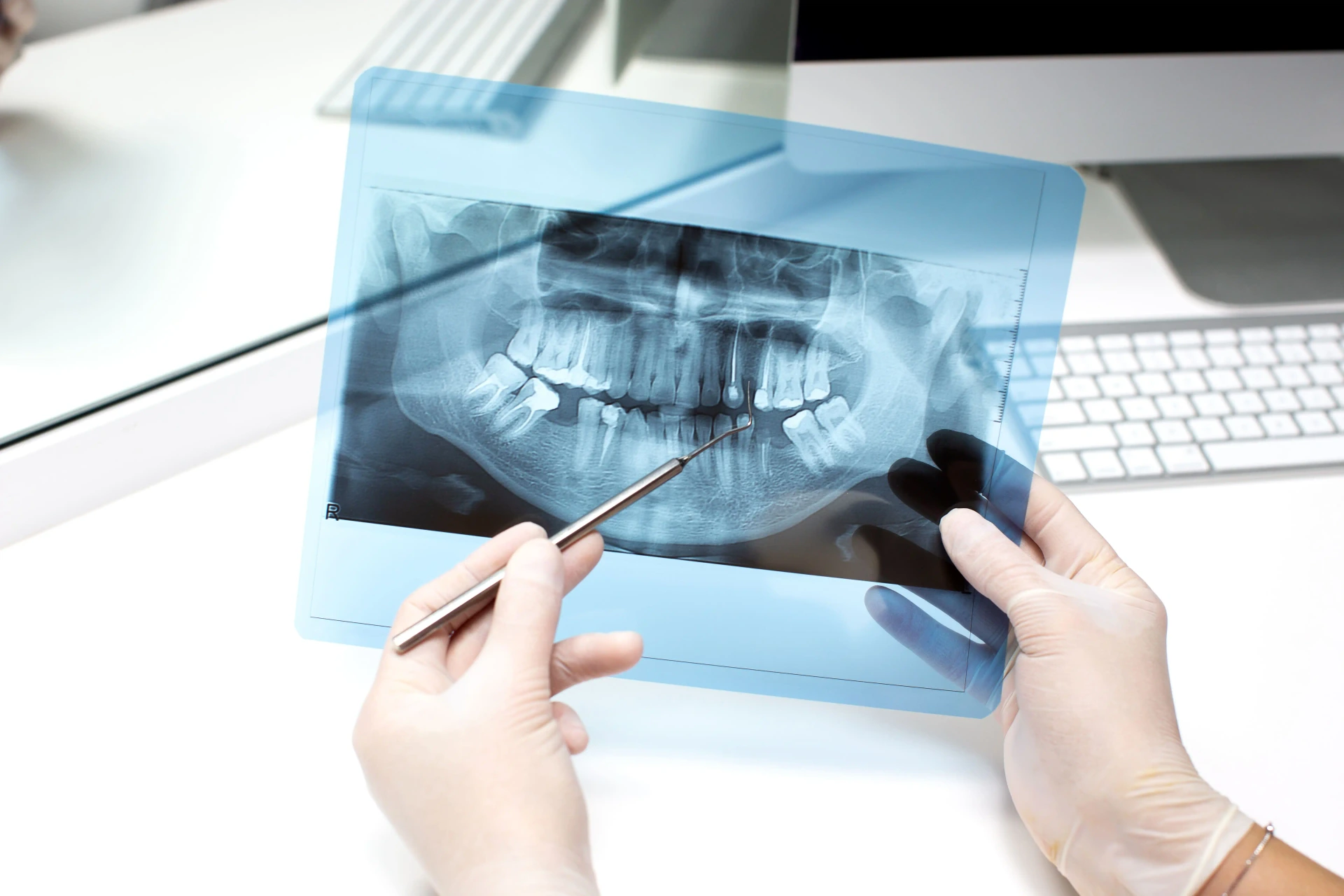
A dental examination tells us a lot, but a large part of each tooth — and all of the bone that supports it — sits out of sight. Digital X-rays let us see between the teeth, beneath existing fillings, around the roots, and into the jawbone, so we can find problems like early decay, infection, or bone loss while they’re still small and easier to treat.
Digital X-rays use a sensor instead of film, so the image appears on screen almost instantly and uses less radiation than older techniques. We can enlarge and enhance the picture to explain exactly what we’re seeing, and store it securely to compare against future visits.
We only take X-rays when they’ll genuinely help — to diagnose a problem, plan treatment such as a filling, extraction, root canal, or implant, or to check how things are healing. How often you need them depends on your individual risk, which we assess for you.
Who is it for?
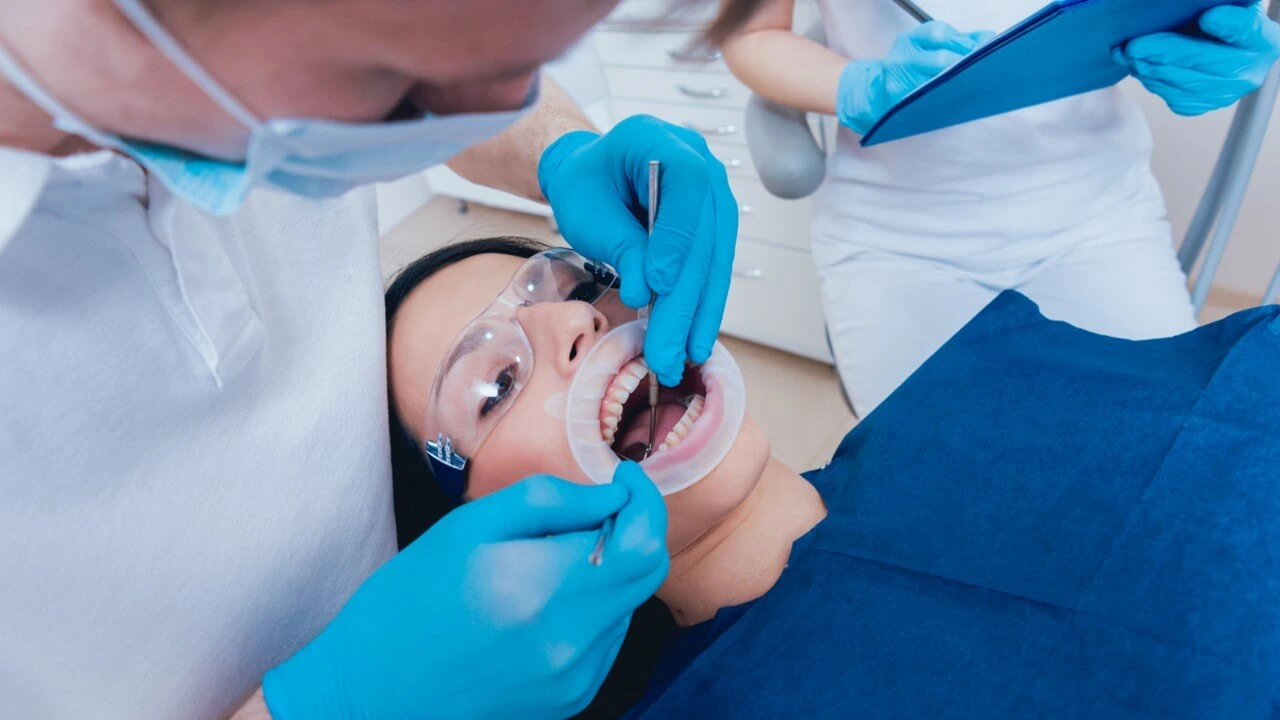
- X-rays help any patient where part of the problem is hidden — for example to check for decay between teeth, beneath fillings, or around the roots.
- They’re used to investigate pain, swelling, or infection, and to see the position of unerupted or impacted teeth such as wisdom teeth.
- They’re an essential planning step before treatments like extractions, root canals, implants, and orthodontics.
- For children, occasional X-rays help monitor developing adult teeth and catch decay in the contact points between teeth.
- This isn’t routine for its own sake — we take X-rays only when the information will genuinely help your diagnosis or treatment, and we tailor the frequency to your risk.
What to expect
- 01Assessment of need — we decide whether an X-ray is warranted based on your symptoms, examination, and history, rather than taking one automatically.
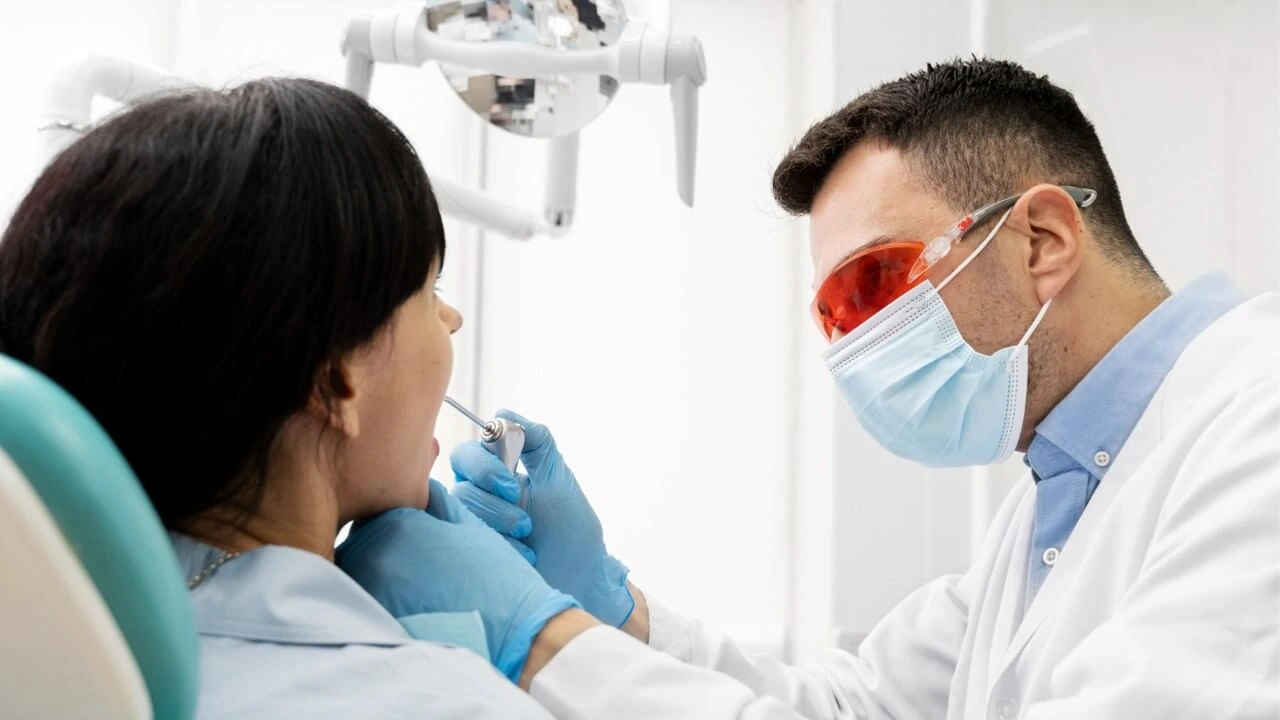
- 02Preparation — for most X-rays you simply sit or stand while we position a small sensor inside your mouth or a scanner around your head.
- 03The image — the X-ray takes a fraction of a second, and the digital image appears on screen almost immediately.
- 04Explanation — we show you the image and point out exactly what we’re seeing, whether that’s a healthy result or something that needs attention.
- 05Planning & records — the image guides any treatment plan and is stored securely so we can compare it at future visits.
Benefits
- Finds hidden problems early — reveals decay, infection, and bone loss that a visual exam alone would miss.
- Lower radiation — digital sensors use less radiation than traditional film X-rays.
- Fast and comfortable — the image appears instantly, with no waiting for film to develop.
- Accurate treatment planning — gives a clear picture for planning fillings, extractions, root canals, and implants.
Are dental X-rays safe?
Digital dental X-rays use a very low dose of radiation — lower than traditional film, and a small fraction of the natural background radiation you’re exposed to in everyday life. We follow the principle of taking them only when the benefit to your diagnosis or treatment clearly justifies it, never routinely for their own sake.
We take sensible precautions, such as using protective shielding where appropriate and tailoring how often X-rays are taken to your individual risk. If you’re pregnant or think you might be, let us know — we’ll usually postpone non-urgent X-rays as a precaution.
Frequently asked questions
Why do I need a dental X-ray if my teeth look fine?
Many problems start in places a visual exam can’t see — between teeth, under fillings, around roots, and in the bone. An X-ray lets us catch decay, infection, or bone loss early, while it’s still small and simpler to treat. We only recommend one when it will genuinely add useful information.
Are digital dental X-rays safe?
Yes. Digital X-rays use a very low dose of radiation — less than traditional film and a small fraction of the natural radiation you encounter day to day. We take them only when they’ll help your diagnosis or treatment and use protective measures where appropriate.
How often should I have dental X-rays?
There’s no fixed schedule — it depends on your individual risk of dental problems, your age, and your dental history. Someone with healthy teeth may need them only occasionally, while someone at higher risk may need them more often. We tailor the frequency to you.
Can I have dental X-rays while pregnant?
Non-urgent X-rays are usually postponed during pregnancy as a precaution. If an X-ray is genuinely necessary for an urgent problem, it can be taken safely with appropriate shielding. Always let us know if you’re pregnant or think you might be.
What’s the difference between digital and traditional X-rays?
Digital X-rays use an electronic sensor instead of film, so the image appears on screen almost instantly, uses less radiation, and can be enhanced and stored digitally. This makes them faster, more comfortable, and easier to compare over time.
How much do dental X-rays cost in Malaysia?
X-rays are among the more affordable parts of dental care, and the cost depends on the type and number taken. We’ll confirm the price before proceeding — contact your nearest Tooth Buddy clinic for current pricing.